

6 June 2026
African American music has always been grounded in sacred sounds, rhythms, and embodied communal practices. In fact, African American music is more than sound; it is testimony, survival, memory, protest, pleasure, praise, and world-making. As June 2026 holds together Black Music Month and Pride Month, we are invited to hear Black music as both sacred and queer: sacred because it gathers us into communion, and queer because it refuses institutional and categorical containment.
This sacred queerness is not new; it is as old as the African American experience itself. For example, Ma Rainey, the “Mother of the Blues,” made Black women’s desire, sorrow, humor, and self-possession audible in a world that tried to discipline Black women’s bodies and silence queer life. Her artistry embodied sacredness through truth-telling. The blues became a kind of altar where the fullness of Black life could be named without apology.
Sister Rosetta Tharpe embodied sacredness through holy disruption. Formed in the church, she fused gospel power with electric guitar, rhythm and blues, and rock and roll, expanding what sacred sound could be. Her performances preached without needing a pulpit: every guitar riff, shout, and rhythmic break announced that the Spirit could move through innovation, virtuosity, and genre-bending freedom.
Sylvester, the “Queen of Disco,” brought sacredness to the dance floor. Their falsetto, glamour, and ecstatic stage presence transformed performance into testimony. In their music, joy was not shallow; it was survival. For Black queer communities, the club has often functioned as sanctuary—a place to breathe, sweat, grieve, flirt, remember, and become.
Big Freedia, the Queen Diva, carries the legacy forward in their bounce music, turning call-and-response, dance, and communal participation into a theology of embodiment. Her performances insist that the body is not a problem to be overcome but a site of power, rhythm, and revelation. In a world that polices Black queer and trans bodies, Big Freedia’s art declares that movement itself can be a form of praise.
Janelle Monáe, Durand Bernarr, and countless other Black LGBTQ+ artists invite us into practices rich with cultural heritage and sonic waves that go beyond formalized linguistics, reaching back to times before slavery and forward to future times of communal liberation. They tie us into Anansi’s tricky and queer web of ancestral wisdom, sacred mischief, and rooted triumph. Through soul, funk, R&B, Afrofuturist imagination, vocal play, and radical self-styling, Black queer artists embody sacredness by making room for multiplicity: masculine and feminine, grief and pleasure, flesh and spirit, ancestry and futurity. Durand Bernarr’s artistry, in particular, feels like a ministry of Black queer self-possession—playful, precise, vocally rich, and unwilling to flatten itself for respectability.
To celebrate Black Music Month and Pride Month together is to honor the Black LGBTQ+ artists, choir directors, dancers, producers, church musicians, writers, and cultural workers who have shaped the sound of freedom, often while being hidden, judged, or erased. Their lives teach us that sacredness is not the absence of queerness; sometimes queerness is precisely where the sacred becomes most honest. In the moan, the riff, the shout, the vamp, the beat drop, and the ballroom chant, Black music keeps inviting us: bring your whole self, make a joyful noise, and let liberation have a sound!
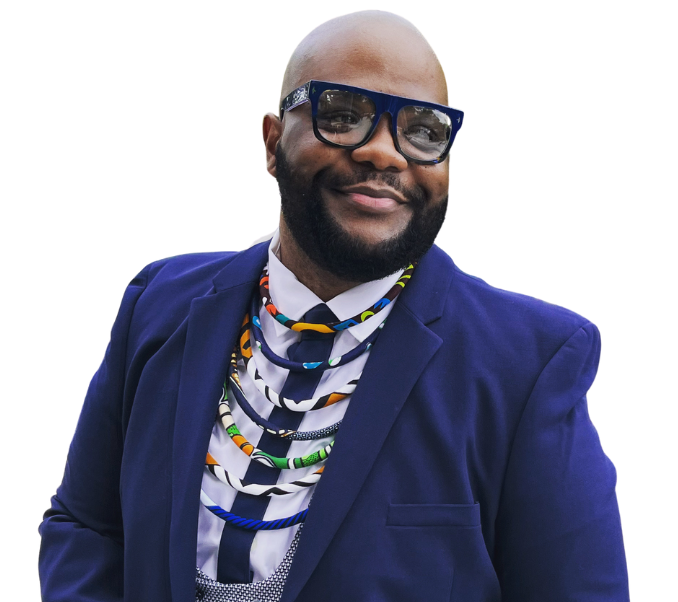
Rev. Terence Mayo, CLGS African American Roundtable Director